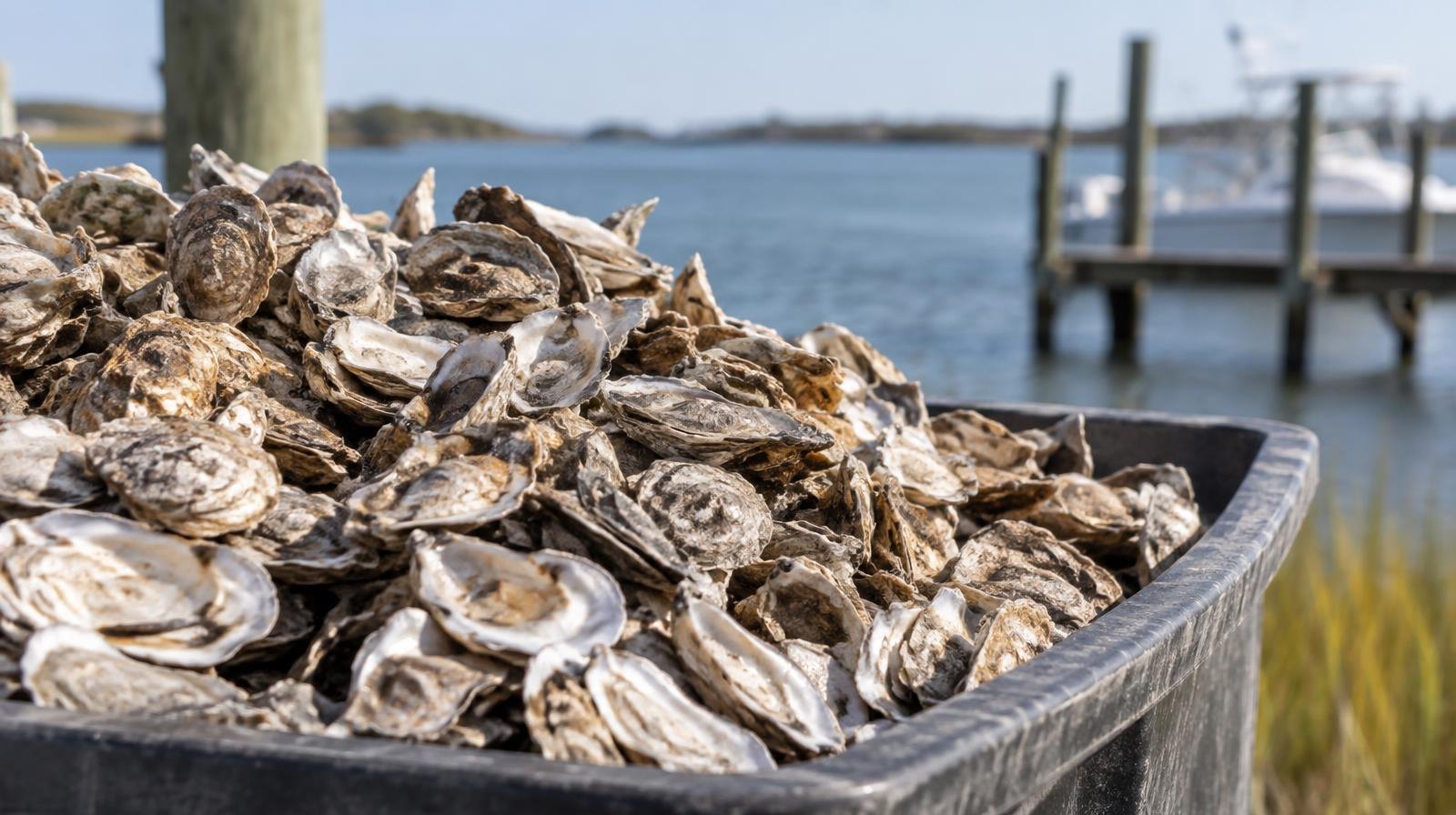
Clear Lake-area restaurants are sending their used oyster shells back to Galveston Bay, where the Galveston Bay Foundation turns them into new reef habitat for baby oysters.
The foundation's shell recycling program has collected more than 2,200 tons of discarded shells from restaurants since 2011, as first reported by Houston Public Media. Participating restaurants in the Clear Lake and Galveston area include Gaido's Seafood Restaurant, Fisherman's Wharf, and Tommy's Restaurant and Oyster Bar. About 40 restaurants across the Houston, Clear Lake and Galveston region take part.
Sally Clark, director of habitat restoration for the Galveston Bay Foundation, said staff picks up shells two to three times a week. The shells then sit in quarantine for six months to kill pathogens and clear food remnants before going back into the water.
"It allows us to keep the shell out of the landfill and return it to the bay for habitat," Clark told Houston Public Media on Oct. 2. "And like a full-circle moment, the shells are sometimes harvested from the bay and then return there after they're consumed."
The bay's oyster reefs are in trouble. Hurricane Ike smothered up to 60% of them, according to Clark. Before 2008, Galveston Bay produced roughly six million pounds of oysters a year, accounting for 90% of Texas oyster production, according to the foundation. Since Ike, annual production has not topped 3.5 million pounds. Droughts and floods have compounded the damage by swinging water salinity levels.
The Texas Parks and Wildlife Department underscored the crisis in February, closing one of eight designated harvest areas in Galveston Bay after finding too few legal-sized oysters. Only two areas remained open.
Recycled shells are especially valuable in October because baby oysters spawning between May and November seek hard surfaces to attach to. The foundation's newest project put those shells to work over the summer, when crews built two acres of oyster reef in Dickinson Bay using recycled concrete and recycled shells. The Dickinson Bay reef is designated non-harvestable, so oysters there can grow into large adults and reproduce freely.
Monitoring of earlier reef phases in Dickinson Bay, built in 2018 and 2022, has recorded oysters reaching 6.5 inches. Crabs, shrimp, fish and mussels now live on the structures.
Clark acknowledged the scale of the challenge. "We're very proud of what we're able to accomplish … but it is still small in terms of the scale and the pace of what needs to be restored in the bay," she said in the Oct. 2 Houston Public Media report.
Residents who want to help can volunteer through the foundation's oyster gardening program. The commercial and recreational oyster harvesting season in Galveston Bay opens in November.