Contaminated shellfish from the Galveston red tide bloom reported this month can cause a form of poisoning that no amount of cooking will fix, doctors at UTMB Health warned Friday, Sept. 18.
UTMB Health, which operates a hospital in League City, issued the clinical guidance as the bloom continued along Galveston Island and the Bolivar Peninsula. The warning goes beyond the respiratory advisories already in place, adding specific risks for people with asthma or chronic obstructive pulmonary disease (COPD) and a new alert about shellfish safety.
Oysters, clams, mussels and other shellfish can accumulate brevetoxins from the water during an active bloom, according to UTMB. Eating them can cause neurotoxic shellfish poisoning. There is no antidote.
Symptoms typically start within hours: nausea, vomiting, diarrhea and abdominal pain, along with tingling or numbness around the mouth or in the arms and legs, dizziness, coordination problems and slurred speech. Some patients experience "temperature reversal," in which hot objects feel cold and cold objects feel hot. Severe cases can cause muscle weakness, partial paralysis or breathing problems, according to UTMB.
Anyone who develops gastrointestinal and neurological symptoms after eating shellfish should seek prompt medical attention, the health system said.
Who faces the highest risk
People with asthma or COPD face particular danger from the bloom's airborne toxins. Dr. Julia W. Tripple, an associate professor of allergy and immunology at UTMB Health, said even brief exposure can worsen symptoms and decrease lung function in those patients.
"People don't have to go into the water to be affected by red tide," Tripple said. "… People with asthma or chronic lung disease should be especially cautious and consider avoiding affected beaches while a bloom is present."
Older adults and people with a history of migraines may also be more sensitive, according to UTMB.
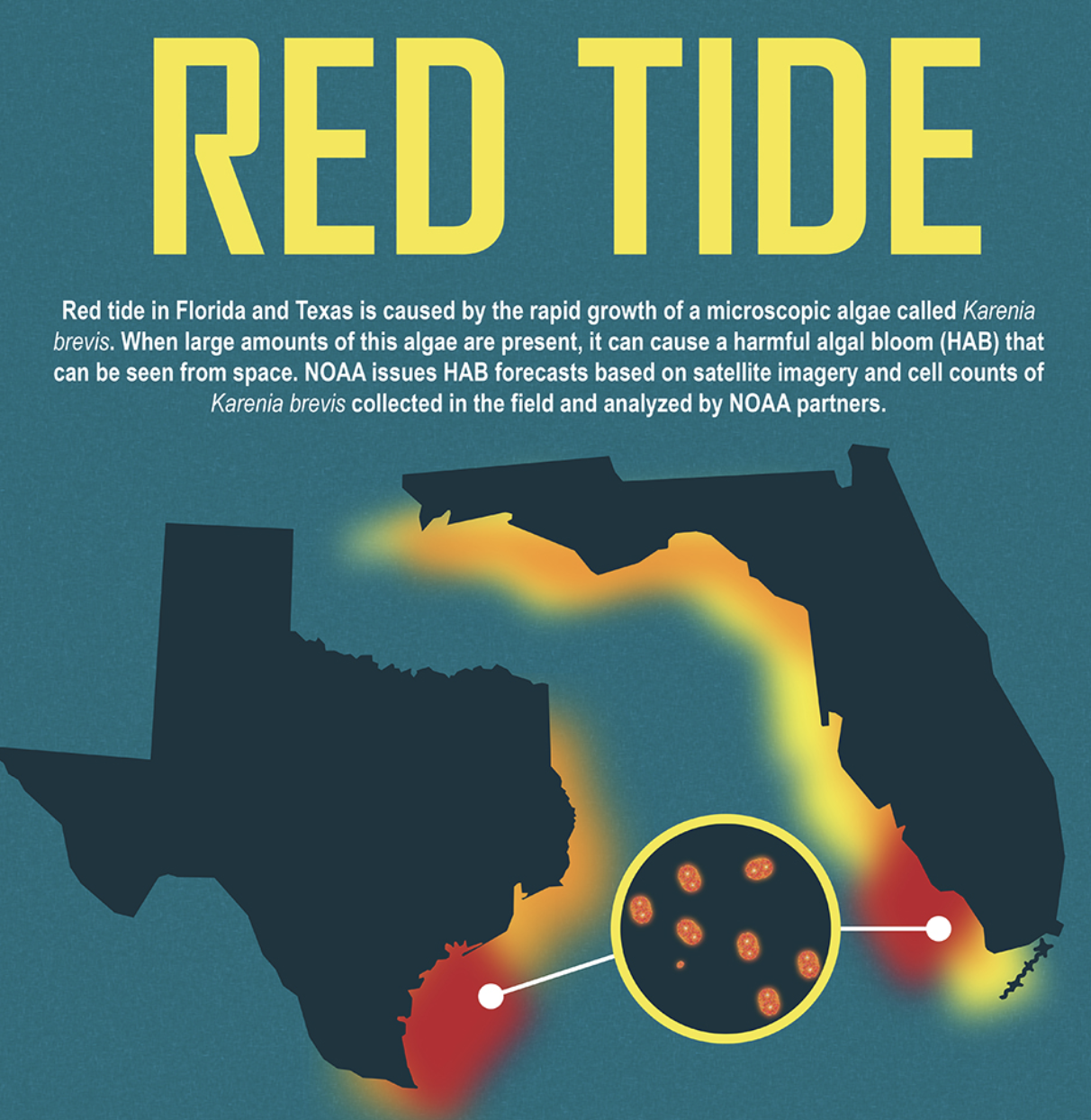
The bloom is caused by Karenia brevis, a microscopic marine organism whose toxins become airborne in sea spray. Beachgoers can develop coughing, sneezing, throat irritation, burning eyes and shortness of breath without ever touching the water. Symptoms often improve after leaving the beach.
UTMB advises people with chronic lung conditions to keep taking their medications as directed and to have rescue inhalers readily available.
Bloom stretches across Galveston area
The Texas Parks and Wildlife Department (TPWD) reported moderate to high concentrations of red tide in water samples from Bolivar Peninsula, Crystal Beach and Galveston Island. Biologists began receiving reports of the bloom on Sept. 8, according to Fox 26 Houston. Fish kills, mainly Gulf menhaden and striped mullet, have been documented along roughly 12 miles of Galveston Island's coast.
The Galveston County Health District issued a red tide advisory for area beaches. Dr. Philip Keiser, the district's CEO, said Monday, Sept. 14, that beachgoers should leave the shoreline if they begin coughing or experience throat irritation or difficulty breathing. He told Click2Houston that anyone feeling symptoms in their lungs and chest should go to the emergency room.
Shellfish safety and what to check
TPWD cautions that toxins can remain in oysters for weeks or months after a bloom appears to have ended. The disappearance of discolored water or dead fish does not mean shellfish are safe to harvest.
Commercially sold shellfish from regulated sources are subject to harvesting restrictions and testing. The Texas Department of State Health Services (DSHS) monitors shellfish-growing areas and can close them to harvesting. Residents can call DSHS at 800-685-0361 for information on current closures.
A NOAA forecast issued Friday, Sept. 18, projected moderate respiratory irritation risk at some Galveston beaches over the following 36 hours. That forecast window has since passed. Beachgoers can check current conditions through NOAA's interactive Gulf Coast Red Tide Respiratory Forecast before heading to the coast.
To report a harmful algal bloom, call TPWD at (800) 792-1112 or (512) 389-4800, select option 4 for Coastal and Saltwater Fisheries, then option 2 for red tide.