Three environmental organizations are fighting a proposed desalination plant on the San Leon Peninsula, warning that dumping concentrated saltwater into Galveston Bay could damage the estuary's oyster reefs, seagrass and fisheries.
The bay is shared by League City and dozens of other coastal communities. Brine discharge into its waters would affect the same estuary where League City residents fish, boat and harvest oysters.
The Galveston Bay Foundation, Bayou City Waterkeeper and the Sierra Club Lone Star Chapter filed formal comments with the Texas Commission on Environmental Quality (TCEQ) on Aug. 21 opposing EPCOR's Bayshore Desalination Facility. The coalition's comments, filed under TCEQ Permit No. WQ0005502000, argue that brine discharge could alter salinity levels, disrupt the bay's natural water circulation and degrade water quality across the enclosed estuary.
The comment period closed Aug. 23.
What the coalition says is at risk
The Kemah-based Galveston Bay Foundation led the drafting of the comment letter. The coalition warned that without adequate management, dilution and monitoring, the discharge could threaten oyster reefs, seagrass beds, marsh habitat, finfish and shellfish. Those resources anchor a food web that supports both the bay's ecology and its commercial fishing economy.
The foundation's position is that desalination intake and discharge infrastructure should be sited offshore rather than inside the bay. The coalition urged TCEQ to evaluate whether offshore alternatives were sufficiently considered before acting on the permit.
In a Monday, Sept. 7, statement, the foundation said it would monitor TCEQ's review and, if the agency grants the permit, evaluate all options including whether to seek a contested case hearing. Under TCEQ rules, a contested case hearing is a formal legal proceeding in which an administrative law judge at the State Office of Administrative Hearings (SOAH) hears evidence on disputed facts.
EPCOR's proposal
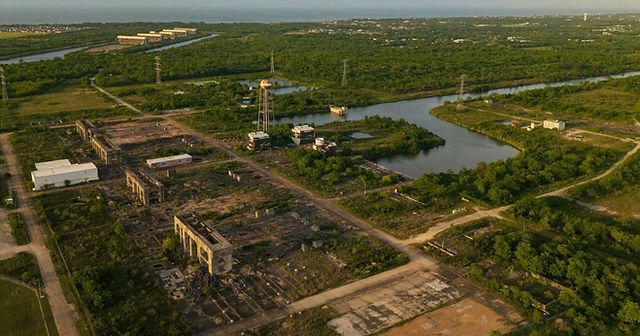
EPCOR, a Canadian utility company, filed its discharge permit application on Oct. 6, 2025. The proposed facility would sit on the site of the decommissioned P.H. Robinson Power Generating Station and produce about 26.5 million gallons of drinking water per day.
In its application, EPCOR cited two studies conducted by Texas A&M University-Galveston (TAMUG). According to EPCOR's press release, one study concluded that brine discharge would have little to no effect on waters within half a mile of entering the open bay. The second found an average discharge salinity of 21.2 parts per thousand, which EPCOR said falls within the optimal range for fish, oysters, crabs and shrimp.
The coalition's August comments specifically challenge the adequacy of that modeling.
EPCOR President and CEO John Elford said in an Oct. 6, 2025, statement that the company would focus on balancing environmental stewardship with long-term water security. EPCOR has not publicly responded to the coalition's August comments.
Community concern
The proposed plant has drawn attention across Galveston County. More than 50 residents attended a town hall at the Bacliff Volunteer Fire Department in late March, organized by the Bayshore Town Square community group, where they questioned EPCOR representatives about effects on marine life and nearby neighborhoods, Houston Public Media reported.
The Raz Halili Trust has also joined the push for a contested case hearing, according to the Galveston County Daily News.
TCEQ must review and respond to the public comments before making a final decision on the permit. No timeline for that response has been announced.