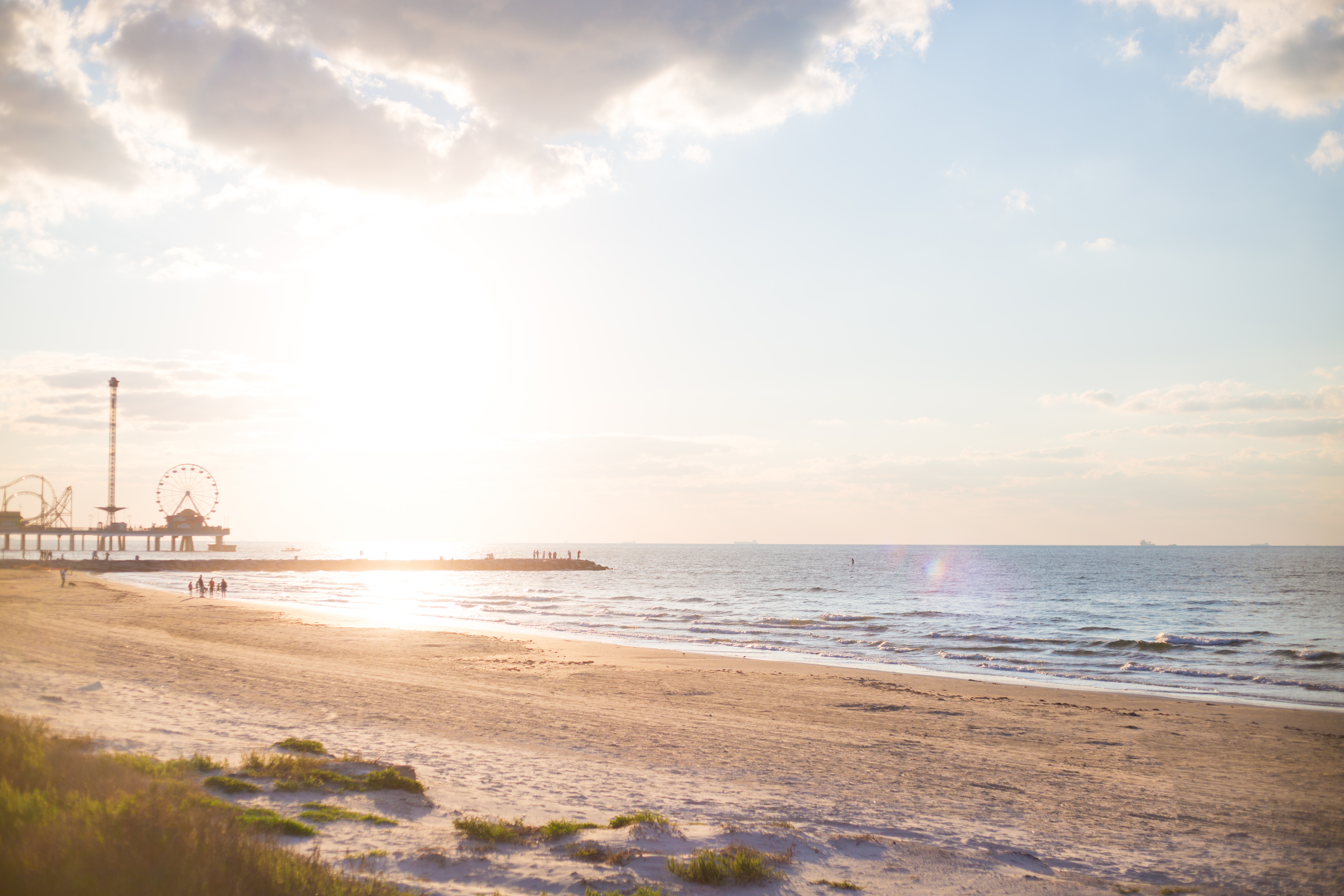
Federal scientists predicted a high risk of respiratory irritation at Galveston County beaches Monday, Sept. 14, after red tide concentrations climbed along the upper Texas coast.
NOAA's National Centers for Coastal Ocean Science (NCCOS) issued the forecast based on water samples collected from Bolivar Peninsula, Crystal Beach and Galveston Island between Sept. 6 and Sept. 13. The agency said the high-risk window extended 36 hours from Monday afternoon, through roughly Tuesday evening, Sept. 15. League City residents heading to the coast should check conditions before going.
The Texas Parks and Wildlife Department (TPWD) confirmed moderate-to-high concentrations of the toxin-producing algae Karenia brevis across all three sampling areas, according to Fox 26.
TPWD's Kills and Spills Team got involved Sept. 8, when the Galveston County Parks Department reported dead forage fish on the Bolivar Peninsula, the Houston Chronicle reported. Officials counted about 10,500 dead fish, mostly menhaden, along with one spotted seatrout, two striped mullet, two alligator gar and two flounder.
Water samples collected Sept. 7 through Sept. 11 initially showed a moderate concentration of red tide near Bolivar Peninsula, KHOU reported. By Monday, levels had risen.
Dr. Philip Keiser, Galveston County Local Health Authority and Galveston County Health District chief executive officer, urged caution. "We encourage residents and visitors to pay attention to how they are feeling, particularly those with asthma or other respiratory conditions," Keiser said, according to Fox 26.
Breathing in red tide toxins can cause coughing, sneezing and watery, burning eyes, according to TPWD. The symptoms are usually temporary. People with asthma face a higher risk of respiratory symptoms and difficulty breathing, according to the CDC.
Red tide can also irritate skin, and swimmers should avoid affected waters.
The NCCOS advisory noted that respiratory irritation risk rises when winds blow onshore or alongshore and drops when winds blow offshore.
TPWD described red tide as patchy, not a blanket across every stretch of beach, and said miles of safe water remain available, according to ABC 13.
The last time the department reported red tide in Texas coastal waters was October 2023. Blooms can last days, weeks or months and typically start in late summer or early fall.
The Texas Department of State Health Services warns that oysters and clams caught in red tide water are not safe to eat, even when cooked, because they can cause neurotoxic shellfish poisoning. Fish, shrimp and crabs caught alive and behaving normally are safe to eat.
NCCOS offers an interactive Gulf Coast red tide forecast tool with beach-level respiratory risk updates. Residents can report suspected red tide, fish kills or unusual conditions to TPWD at 512-389-4848.